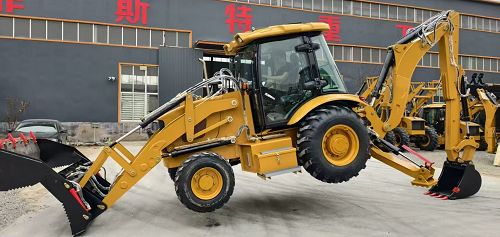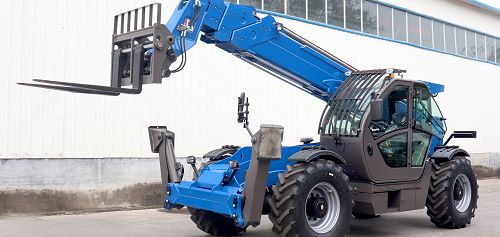
Forklifts are widely used in agricultural operations. Their flexible operation and strong load-bearing capacity make them adaptable to various agricultural production scenarios, improving operational efficiency. In agriculture, forklifts are primarily used for transporting goods in farms, orchards, and livestock farms, such as fertilizers, pesticides, seeds, and feed, moving supplies from warehouses to fields and farms, reducing manual handling and labor intensity.
In orchards, forklifts can be used to transport fruit and fruit baskets, quickly moving harvested fruit to storage areas to prevent damage and improve harvesting efficiency. In livestock farms, they can be used to transport feed and livestock equipment, adapting to the limited space and offering flexible operation. Forklifts used in agricultural operations are typically light or medium-duty, with compact bodies and agile steering, allowing them to navigate uneven terrain in fields and orchards. Equipped with off-road tires, they offer strong traction and prevent slippage. Some electric forklifts are quiet and exhaust-free, suitable for use in orchards and livestock farms without polluting the environment. It is important to note that agricultural work sites are often uneven, so it is necessary to control driving speed and avoid sudden acceleration and braking. Regularly check the tires and braking system of the equipment to ensure operational safety. At the same time, it is necessary to protect the equipment from dust and water to prevent dust and mud from entering the equipment and causing malfunctions.